A Shared Pantry Shelf, Ready for a Busy Week
A shared pantry shelf can make planned meals easier to assemble by showing what is already on hand, what belongs to whom, and what needs using first.
Which pantry items will actually help you make the meals already on your busy-week calendar? A shared pantry shelf works best when it answers that question at a glance, without turning into a recipe plan or a reason to buy more. Arrange the food around the meals you intend to make, then leave the rest of the pantry alone.
Start with the meals already on the calendar
Look at the week’s existing meal plan, texts, or household calendar. Note the meals people have already agreed to make, including a packed lunch or a simple breakfast if that is part of the plan. Do not add dishes just because an ingredient is sitting on the shelf.
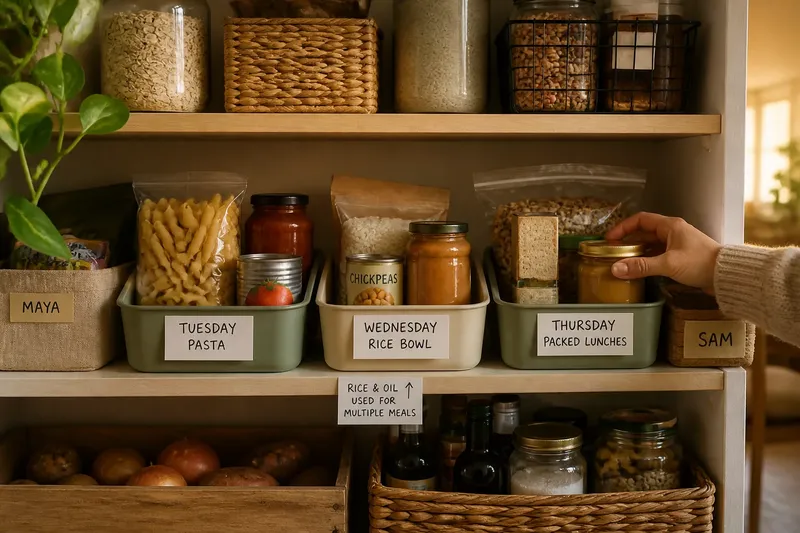
Write each intended meal on a small piece of scrap paper, or use a dry-erase label on the shelf edge. Keep the wording brief: “Tuesday pasta” or “Thursday packed lunches.” This is a signpost, not a recipe card.
Now check the pantry for items that belong with those meals. Set aside only what is already there and likely to be used: the opened pasta, a can of beans, rice, crackers, or the seasoning someone expects to reach for. Fresh ingredients can remain in their usual storage places; the shelf is for making the pantry contribution visible.
Give each meal a visible place
Group pantry items by intended meal rather than by type. A shallow basket, a washable tray, or a clear patch of shelf can hold the dry ingredients for one planned meal. Keep the meal note beside the group, where the next person can see why those items are together.
Think of each group like a small envelope: its contents are gathered for a particular purpose, but nothing is sealed away. Leave labels facing outward and avoid stacking bags or cans so deeply that people must unpack the whole shelf to see what is there.
Keep the arrangement modest. If three meals are planned, make three small groups. If two planned meals use the same rice or oil, leave that shared item in a common spot and add a note pointing to it rather than splitting or hiding it. The shelf should reveal connections, not create extra handling.
Make ownership and shared use easy to read
A shelf used by several people needs a clear distinction between shared food and personal food. Agree on a simple mark that everyone recognizes, such as a name written on removable tape for personal items and an unmarked area for communal supplies. Do not assume that an unmarked package is available if your household has not agreed to that convention.
Place shared items where everyone can reach them, and keep personal items together in a separate corner or container. If one person has set aside a particular ingredient for a planned meal, a short note can say “for Thursday dinner” without implying that the food is off-limits forever.
Say you share a pantry with two roommates and the calendar already includes a Wednesday rice bowl. You find rice, a tin of chickpeas, and an opened jar of mild sauce, then group them in a tray with a “Wednesday” note. The expected result is that the cook can spot those available components quickly and decide how to use them, while the tray makes no claim that the meal is a fixed recipe.
What should go on a shared pantry shelf?
Should the shelf hold ingredients for every planned meal?
No. Put pantry items there only when gathering them makes the intended meal easier to see or assemble. Leave bulky staples and ingredients already easy to find in place.
How do you show that an item is reserved?
Use a short, specific note beside the item or group, such as “for Monday lunch.” Keep the note visible and remove it when the plan changes or the item is used.
What if one ingredient belongs to several meals?
Leave it in a shared location and point to it from the meal notes. That way, nobody mistakes one portion or one plan for exclusive ownership of the whole package.
What if the week’s plans change?
Move the meal note or remove it, then return any unused food to its ordinary place if the grouping no longer helps. The shelf should reflect the current plan, not preserve an outdated one.
Keep the shelf useful as the week shifts
Plans change because someone gets home late, a meal moves to another day, or a household member offers to cook. When that happens, update only the affected note and food group. Avoid reorganizing the entire pantry; a small correction is easier for everyone to follow.
When a planned meal is finished, clear its spot. Return unopened or still-useful items to their normal pantry location, and keep anything that remains assigned to another meal with that group. This keeps the shelf from becoming a second pantry layered on top of the first.
Set one brief point in the week to check whether the notes still match the household’s plans. A glance before the next grocery trip can also help people notice what is already available, but the shelf is not a shopping list. Let the existing plan guide what stays visible, and let the people sharing the pantry decide separately what, if anything, they need.
A shared pantry shelf earns its space when another person can understand it without asking who claimed the food or what meal it belongs to. Keep the meal names plain, make shared and personal boundaries legible, and take down notes as soon as they stop helping. That small reset leaves the next busy week with a clear view of what is already on hand.