The Second Job of a Glass Jar
Choose a second use for a glass jar by matching its opening, shape, and lid to a real household task, so useful containers earn their shelf space.
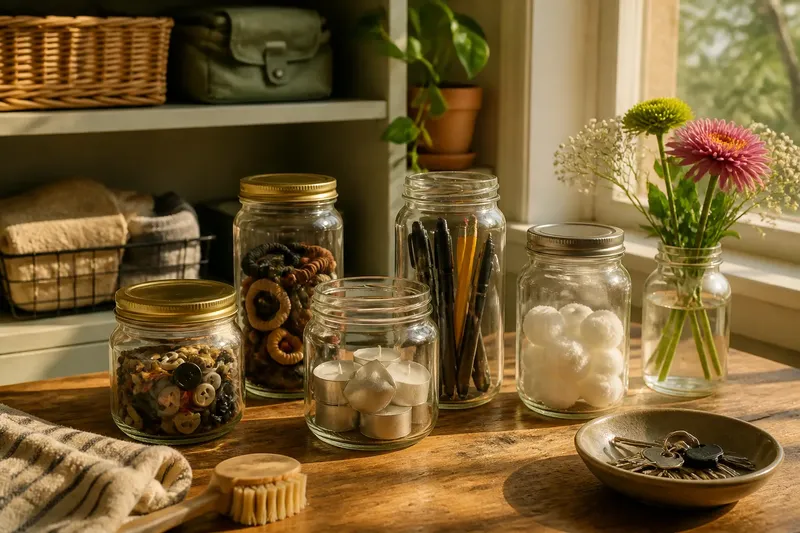
A glass jar earns a second job when its opening and shape suit a task you already have. For glass jar reuse, start with the job—not the container—and keep only jars that solve a specific household problem.
That distinction matters because empty jars are easy to save and easy to forget. A clear purpose helps you choose the right one, prepare it properly, and decide when it is no longer useful. Treat the jar like a tool: a funnel is handy because its shape serves a job, not because it might come in useful someday.
What makes a jar suitable for a second job?
Look at the jar as a set of features rather than a generic container. Its opening controls what can go in and come out; its body affects what fits and how easily you can reach it; and its lid may protect contents from dust or spills. Together, those details determine whether the jar suits a particular task.
Begin with the opening. A wide mouth is easier to load with cotton rounds, buttons, or wrapped snacks, and easier to clean by hand. A narrow neck can work for a small bouquet or a pourable household supply, but it makes scooping and scrubbing harder. If the intended contents have to be forced through the opening, choose another container.
Next, consider the body. A squat jar is stable on a counter and easy to reach into. A tall, narrow jar uses less room on a shelf, but small objects can disappear at the bottom. A clear side helps you see what remains; an opaque label or colored glass may be useful when visibility is not wanted, but it can also make contents harder to identify.
Finally, check the rim and lid. A chipped rim can cut skin and makes the jar unsuitable for handling or storing household items. A lid that screws on smoothly can keep dust out or contain dry goods during ordinary storage. Do not assume a repurposed jar is safe for canning, pressure, heat, or long-term food storage simply because it once held food.
Which household task should the jar match?
Start by naming a small, recurring problem: loose hair ties in a bathroom drawer, pens rolling around near a desk, or recipe cards slipping behind a kitchen cabinet. Then ask whether a jar would make that task easier than the container or storage spot already in use. If the current arrangement works, the jar does not need a job.
Match the jar’s features to the task:
- Small items you reach for often: Choose a wide mouth so fingers can retrieve things easily. A low jar may suit clips, spare buttons, or rubber bands.
- Tall items that need to stand upright: Choose a taller shape with a base broad enough to sit steadily. Check that the items do not catch on the rim.
- Dry supplies you want to see: Clear glass can make contents visible at a glance. Add a simple label if the contents could be mistaken for something else.
- Items that should stay free of dust: Use a sound lid if it closes properly. A loose or mismatched lid does not provide dependable protection.
- Water-based contents: Consider where the jar will sit and whether a spill would cause trouble. A jar without a secure lid belongs somewhere it cannot be knocked over easily.
Say you keep finding loose tea-light holders and matches mixed together in a drawer. A clean, wide-mouth jar could hold the holders where you can see them, while the matches stay in their original packaging elsewhere. The visible result would be a drawer with the holders gathered in one place and no need to rummage for them. If the jar is too tall to fit the drawer or makes the holders difficult to remove, it is the wrong choice despite being clean.
How should you prepare a jar before reusing it?
Wash the jar and lid with dish soap and warm water, remove any remaining food, and let both dry fully. Check the inside, rim, threads, and base for cracks, sharp edges, residue, or a persistent odor. Discard a jar with damage rather than trying to make it suitable by covering the flaw.
Labels can be stubborn. Soak the jar in warm, soapy water and peel the paper away; use a gentle scrubber for remaining adhesive. If you consider a cleaning product or tool for the residue, follow its label and the jar manufacturer’s guidance. Keep the opening and threads clean so the lid can close as intended.
For a non-food task, you can often leave a small label in place if it does not interfere with use. For a food-related purpose, clean the jar thoroughly and use it only for ordinary storage that suits the container and lid. A reused jar is not a substitute for equipment designed for preserving food or handling heat.
Where can a reused jar work well—and where can it fall short?
Jars are most useful for small, dry objects that benefit from being grouped and visible: sewing notions, spare keys, craft beads, or pens. They can also hold a few stems of flowers. Their transparent sides make it simple to spot what is inside, and a lid can help keep dust away from contents that are stored rather than used constantly.
They are less convenient for items that need frequent one-handed access, need a flexible or squeezable container, or are awkward to lift through a narrow neck. Glass is also breakable, so a jar may be a poor choice on a busy edge, in a child’s play area, or anywhere a fall could create a hazard. Choose a lighter, sturdier container for those settings.
Watch for the “container creates a new task” problem. If you have to move a jar aside to reach something else, remember what it contains, or wash it more often than the stored item needs, the reuse may not be helping. A second job should fit the household routine rather than adding an extra chore.
What questions help you decide?
Can I reuse a jar with its original label?
Yes, for a non-food purpose if the label is clean and does not confuse anyone about what the jar now holds. Cover or replace it when the old wording could lead to a mix-up.
Does every reused jar need a lid?
No. A jar for pens or a small bouquet may work better open. Keep a lid only when it serves the task, and do not count on a lid that is bent, rusty, cracked, or difficult to close.
Can a jar replace a food-storage container?
It may suit simple, short-term storage of dry food if it is clean, intact, and closes appropriately. For preserving, heating, or other specialized food use, follow the food-safety guidance and equipment instructions relevant to that task.
What should I do with a jar that has no clear use?
Recycle it where local glass collection accepts that type of jar, or offer it to someone who has named a specific use. Avoid keeping it solely because a possible job might appear later.
How do you keep jar reuse from becoming a pile?
Give each saved jar a destination before it enters storage. Write the task on a small note, place the jar where that task happens, or set it beside the items it is meant to hold. If you cannot name a task, let the jar leave the cupboard rather than joining an indefinite reserve.
Reconsider the choice after using it in its intended spot. Does the opening make retrieval easy? Does the jar fit without blocking other things? Is the lid useful, and can you clean the jar without fuss? A clear answer lets you keep the arrangement, change the job, or recycle the container.
Glass jar reuse works best when shape, access, and location all agree. Before saving another empty jar, name the task it will handle and check that its opening suits your hand and its body suits the space. That small decision gives the container a genuine second job—and keeps the cupboard from becoming its only destination.